

- This event has passed.
Webinar by DNV: Climate Risk in the Commodity Value Chain
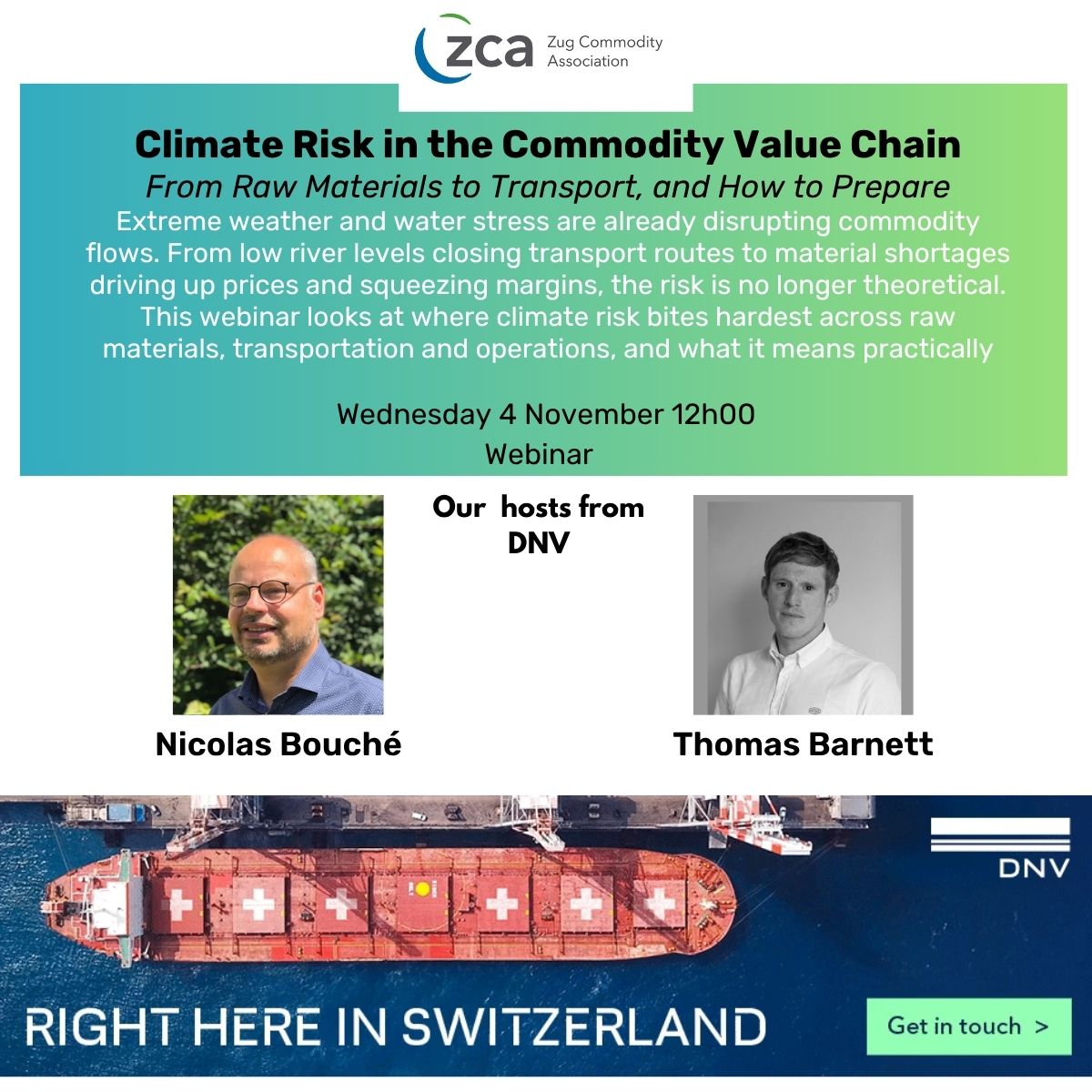
Climate Risk in the Commodity Value Chain: From Raw Materials to Transport, and How to Prepare
Extreme weather and water stress are already disrupting commodity flows. From low river levels closing transport routes to material shortages driving up prices and squeezing margins, the risk is no longer theoretical. This webinar looks at where climate risk bites hardest across raw materials, transportation and operations, and what it means practically: are you still a supplier’s preferred client when material runs short, and can you absorb the cost if prices spike? Drawing on real client work, we share what we have learned about starting small, prioritising the right risks, and building a practical response, before it becomes a financial one.
Join Zoom Meeting
https://zoom.us/j/6603944276?pwd=62iD4EEvXpmubRUTPbZj9GbfrVRXq7.1&omn=96912687915
Meeting ID: 660 394 4276
Passcode: 264231
Session outline
- Open with a live disruption example (3 to 5 min)
The Rhine and other European inland waterways last summer: low water levels closing transport routes, hitting industrial output and commodity flows across Switzerland, eastern France and Germany. Panama Canal drought as a second, global-scale illustration of the same dynamic.
- The mechanism: three domains (7 to 8 min)
Climate stress does not need a dramatic or unpredictable trigger to hit a commodity business. It travels through three practical domains:
- Raw materials: availability and price of key feedstocks and inputs
- Transportation and operations: physical routes, sites and logistics (rivers, ports, shipping lanes)
- Disruption and preparedness: what happens once the first two are stressed, am I a preferred client when material runs short, can I absorb a price spike, do I have alternative sourcing
- Making it quantifiable (5 to 6 min)
The Henkel raw-materials mapping work as the proof point: 30,000 raw materials mapped to feedstocks, with climate and nature risk overlaid at source, to identify where in a global supply chain climate stress concentrates.
Key methodological learning to share: start small. One material first (cotton, for example), one country first, then duplicate the methodology. Trying to map everything at once produces breadth without clarity, and slows down the ability to act.
- So what: why act now (4 to 5 min)
Acting while a risk is still a material risk (manageable, cheaper) beats waiting until it becomes a financial risk (forced, expensive, reactive).
Practical questions the audience should walk away able to answer:
- What proportion of my imports or inputs is genuinely at risk
- What is my mitigation plan (double sourcing, scenario planning)
- What would a 10 to 40 percent price increase do to my margin, and would I still choose to serve that market at that cost
- Close and forward hook (2 to 3 min)
Invite the audience to share, live or via a quick poll, examples of disruption they have already faced. Useful both as engagement and as material to carry forward into future sessions.
- Q&A / discussion (10 to 15 min)